
2025 | Oct
This publication constitutes an ode to Piraeus, a place marked by a distinct historical and social imprint. Conducted within the framework of an internship at the National Centre for Social Research, the study seeks to delineate the “invisible” dimension of the port city, focusing specifically on Filonos Street in the district of Troumpa. Through a combination of historical research, field documentation, spatial analysis, and cartographic representation, the study highlights transformations in forms of entertainment and their social significance, which have contributed to the shaping of the area’s urban landscape. Its objective is to demystify a stigmatized segment of the city, to interpret its past, and to bring to the foreground its present condition.
The memory of the night
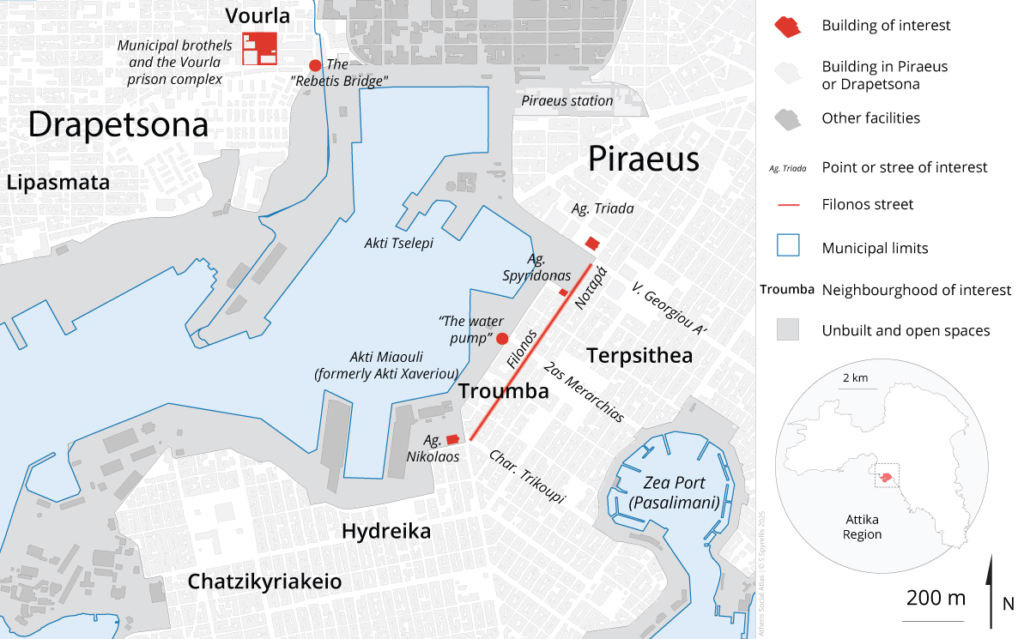
Troumpa constitutes a district of Piraeus with a pronounced historical, spatial, and social footprint. The area extends from the Church of Agios Nikolaos to the Church of Agios Spyridon, with Filonos and Notara Streets forming its principal axes of activity. The name “Troumpa” derives from a water pump (tromba in Greek) formerly located at the intersection of 2nd Merarchias Street and Akti Miaouli, which supplied horse-drawn municipal sprinklers during a period when roads remained unpaved (Πετρόπουλος, 1980).
Prior to Troumpa’s establishment as the principal locus of prostitution in Piraeus, this function was fulfilled by the Vourla complex, situated on the opposite side of the port in Drapetsona, beyond the railway lines that divide the area.
Map 1: Piraeus and Drapetsona
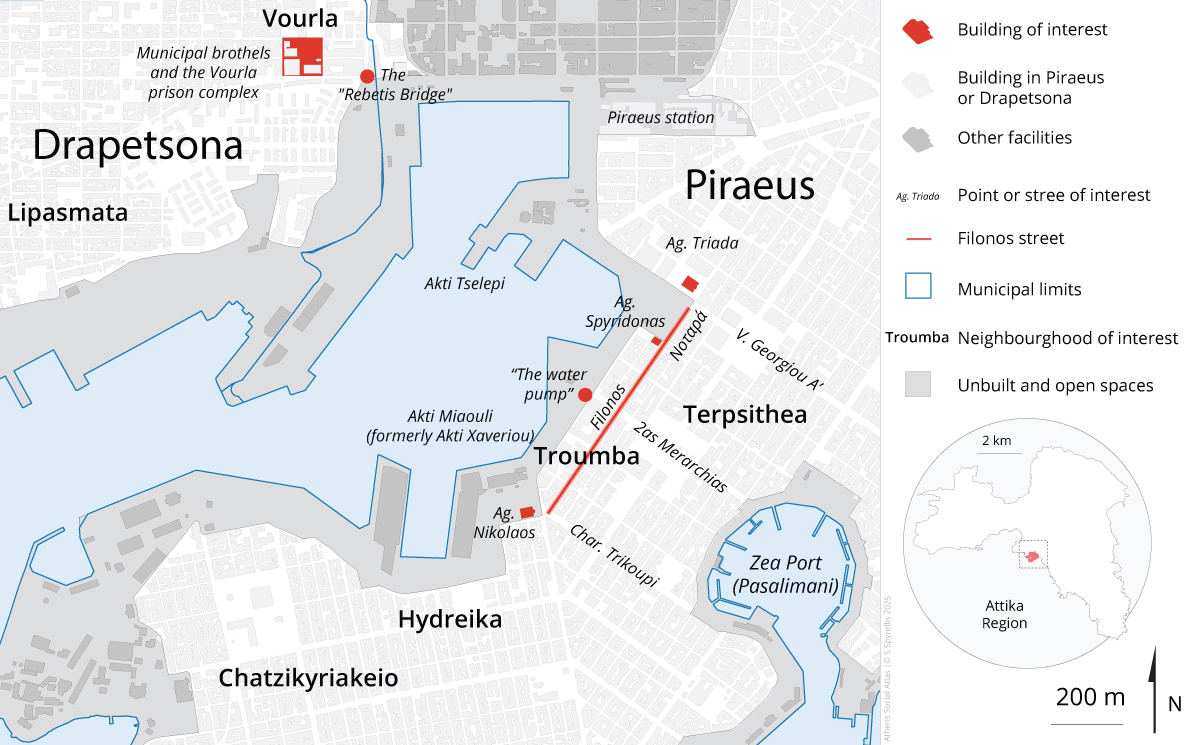
Above these railway lines still passes today the so-called “Rebetis Bridge,” which was crossed daily by workers employed in the slaughterhouses and machine workshops of the area. At the time, this bridge functioned as a significant point of reference, as it marked the entrance into a different zone governed by its own rules and codes. As noted by Giannis Papaioannou [1] only upon crossing the “Rebetis Bridge” [2], that is, upon leaving the social haunts of Piraeus and arriving in Drapetsona, one could be considered a true “mangas” (streetwise guy). In this way, the transition from urban Piraeus to the working-class, refugee neighborhood of Drapetsona is defined, at whose threshold one encountered the brothel-barracks complex of Vourla (Πετρόπουλος, 1980).
Photo 1: The “Rebetis Bridge” as it appears today
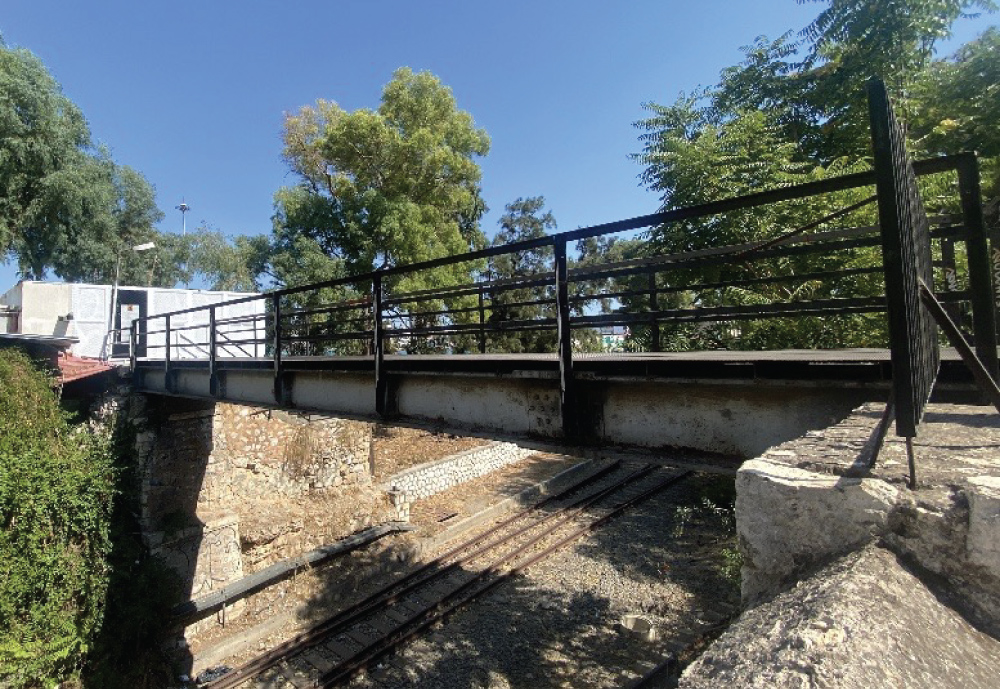
Photo: A. Angelopoulou
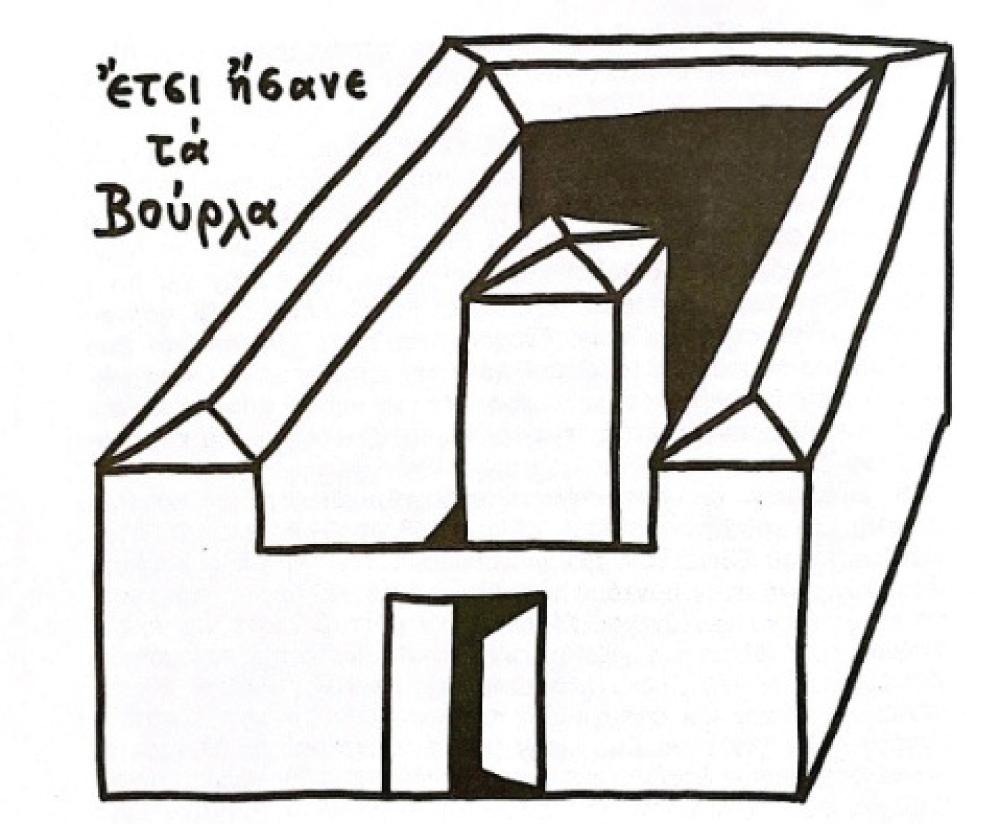
The Vourla complex constituted a walled building compound. Its facilities included three wings, each accommodating approximately 70 women, with allocation to the wings determined on the basis of age. The youngest group, aged 14 to 18, was regarded as the “aristocratic” section. Women between the ages of 18 and 40 were classified within the intermediate category. The older group, aged 40 to 50, were assigned to the so-called “katsikadiko” (goat-house) the most degraded section of the complex. After the age of 50, women were required to leave Vourla, while those who remained were employed there as cleaners.
The Vourla complex was also directly associated with the concentration of tekedes (hashish dens). Numerous such spaces operated around the compound [3], often so small that they could accommodate only two to three individuals. Thus, the sexualized space of brothels and the non-sexualized space of the tekedes traditionally formed a mutually reinforcing network [4] in Piraeus and elsewhere.
Photo 2: Volumetric sketch of the Vourla complex
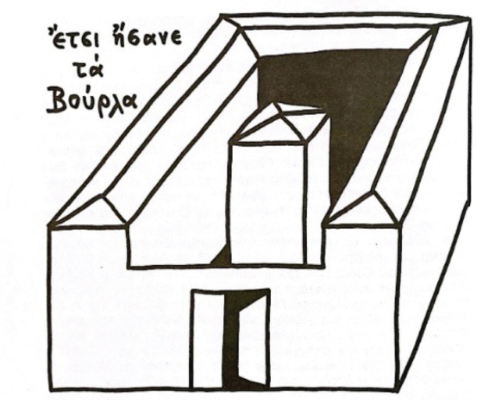
Source: Πετρόπουλος, 1980.
During the German Occupation, the municipal brothels of the Vourla complex were closed and converted into prisons for political detainees. At that time, sex work was displaced from one end of the urban fabric of Piraeus to the other, into its very core, the port, thereby transforming Troumpa and conferring upon it the reputation that continues to define it to this day.
Photos 3 & 4: Remnants of the prison wall of the Vourla complex within a machine workshop
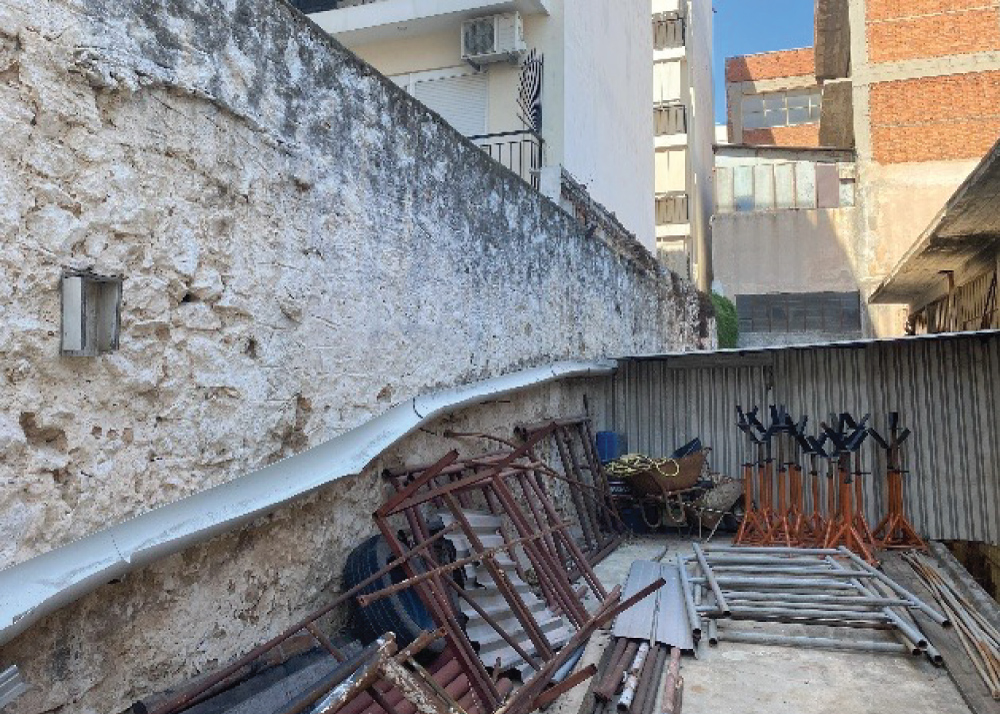
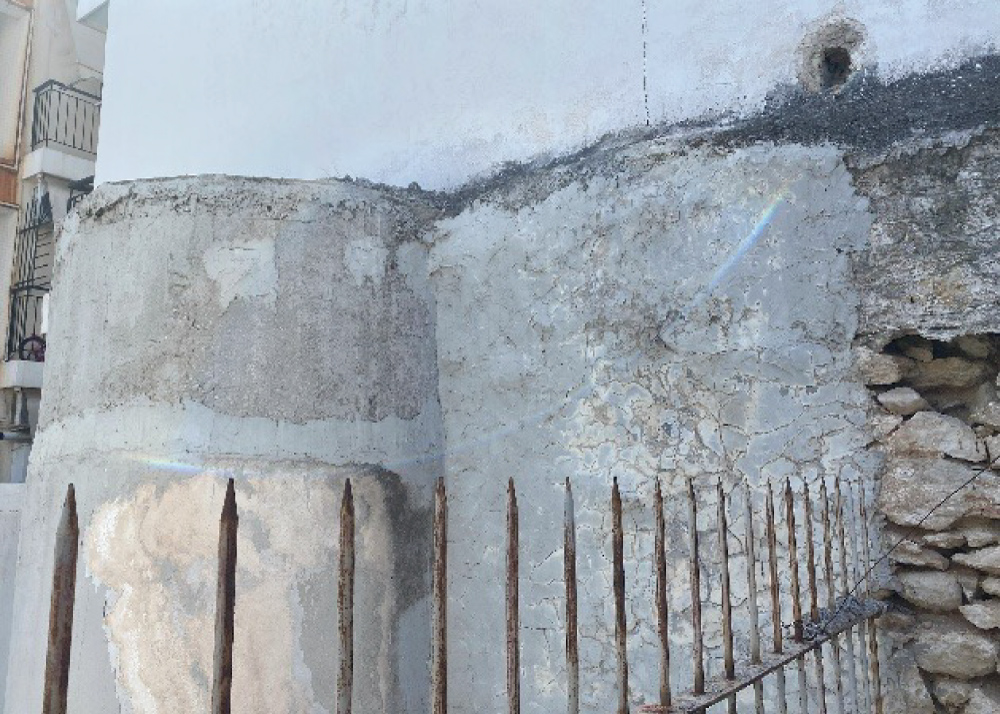
Photo: A. Angelopoulou
With the relocation of brothels, younger women were installed in house-based brothels and brothel hotels (Πετρόπουλος, 1980). At that time, the area was transformed into a site of intense nightlife activity, with brothels, cabarets, bars, and erotic cinemas saturating its narrow streets.
V. Pisimisis writes about Troumpa (Πισιμίσης, 2021):
“For the Church, it was a place of debauchery. For the State, an immoral impediment to its work. For respectable residents, the shame of Piraeus. For sailors, a site of entertainment and excess. For adolescents, an initiation into sexuality. For the women engaged in sex work, a refuge from social contempt. And for madams and pimps, an easy means of financial gain.”
The Fleet Arrives
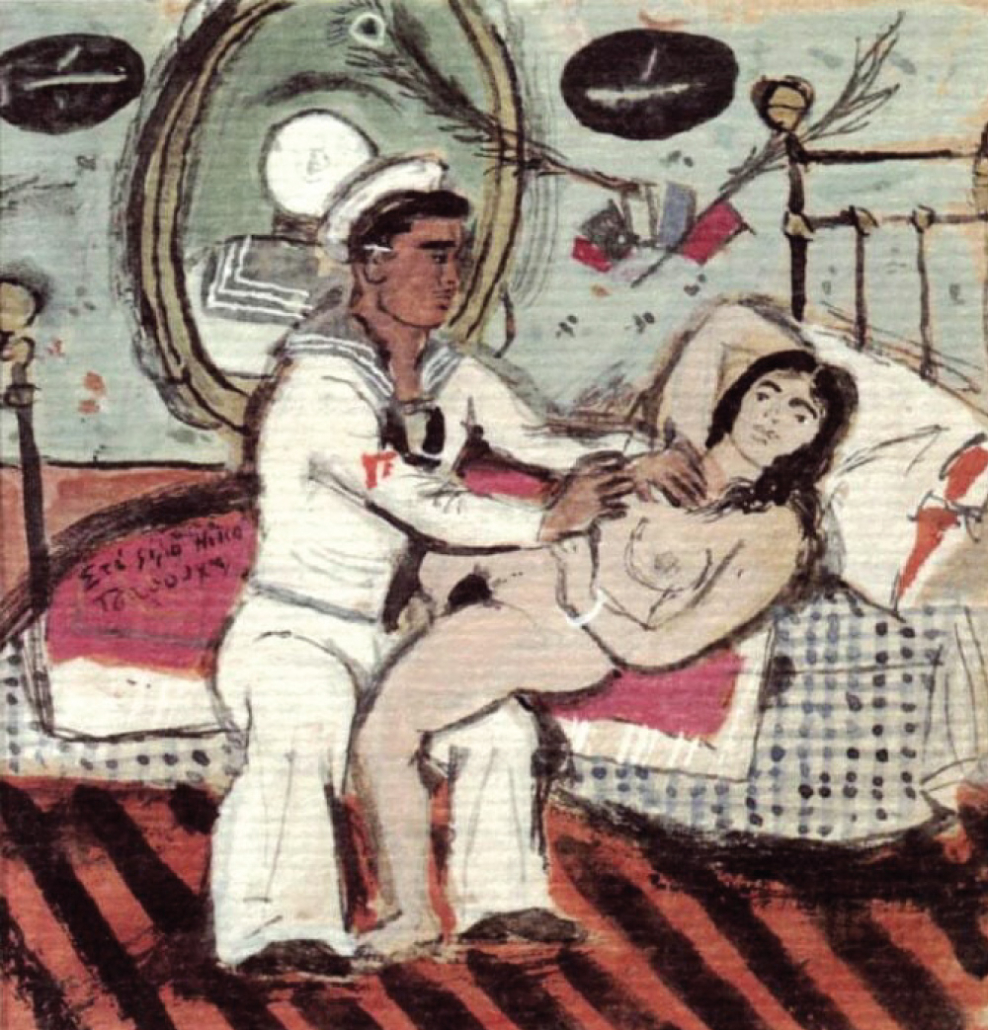
In the postwar period, the nightlife of Troumpa began to flourish increasingly, particularly with the arrival of the U.S. Sixth Fleet at the port. News of its arrival would circulate up to twenty days in advance, allowing women from across Attica to travel to Troumpa in order to secure a rapid source of income. This phenomenon indicates a marked intensification of sex work in the port of Piraeus, in contrast to Athens, where no comparable development had occurred up to that point.
Thus, a visit to the women of Troumpa, which on ordinary days would cost 27 drachmas, would rise to approximately 55 when the Fleet was docked at the port, while at the same time prices in cabarets and hotels would double (Πισιμίσης, 2021).
Photo 5: Sailor and prostitute
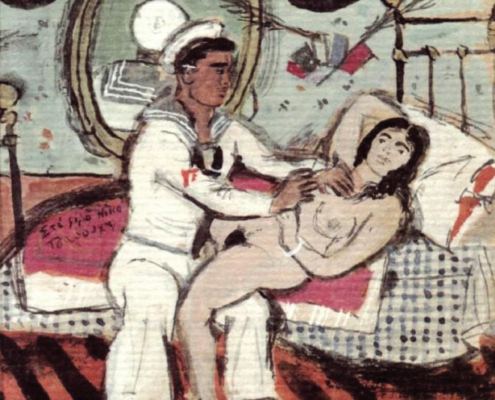
Source: Yannis Tsarouchis, Nikos Kavvadias “Poussi”, 1973
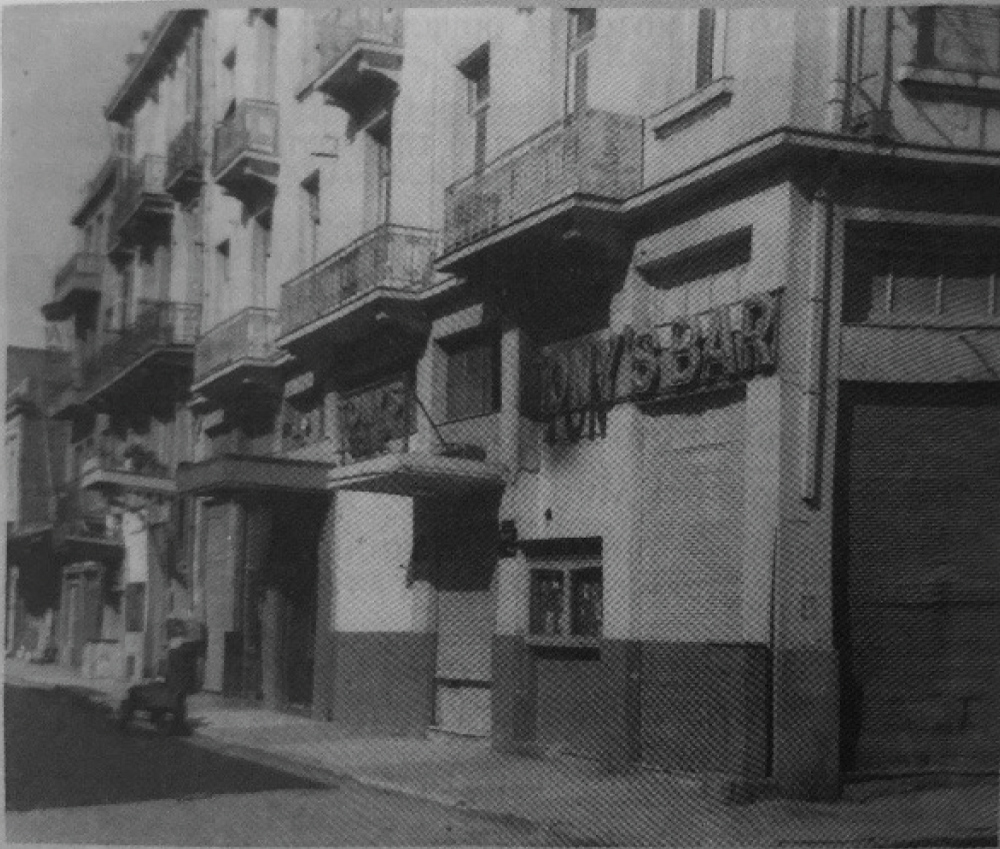
During those periods, rhythms shifted, and the melodies of rebetiko bouzouki music that had previously filled the streets of Troumpa on a daily basis would cease, giving way to European and American sounds tailored to the preferences of the sailor-consumers. The area, moreover, was in a constant state of readiness: bar and cabaret signs were often written in English, while women took private English lessons in order to be prepared to receive the Fleet.
Photo 6: Promotional leaflet from the 1960s, Tony’s Bar, 122 Filonos Street
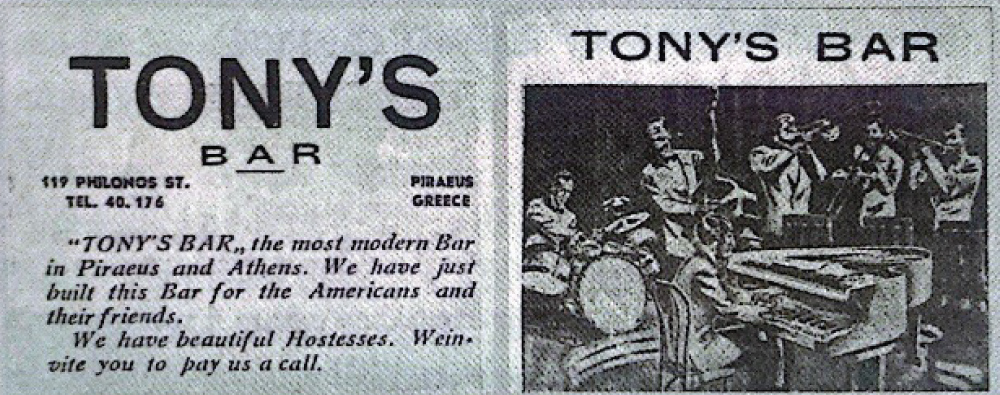
Source: Πισιμίσης, 2021
Photo 7: The bars Tony’s, Tropicana, and Black Cat, and the hotels Gallia and Lux, Filonos Street, 1960s
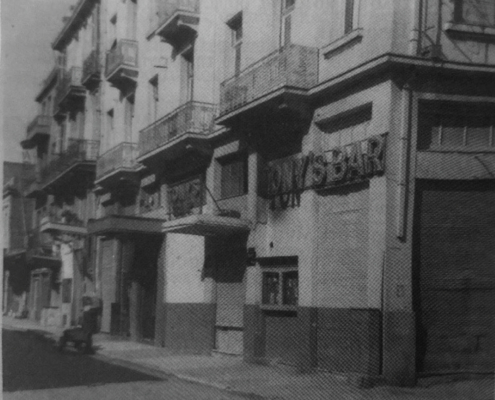
Source: Πισιμίσης, 2021
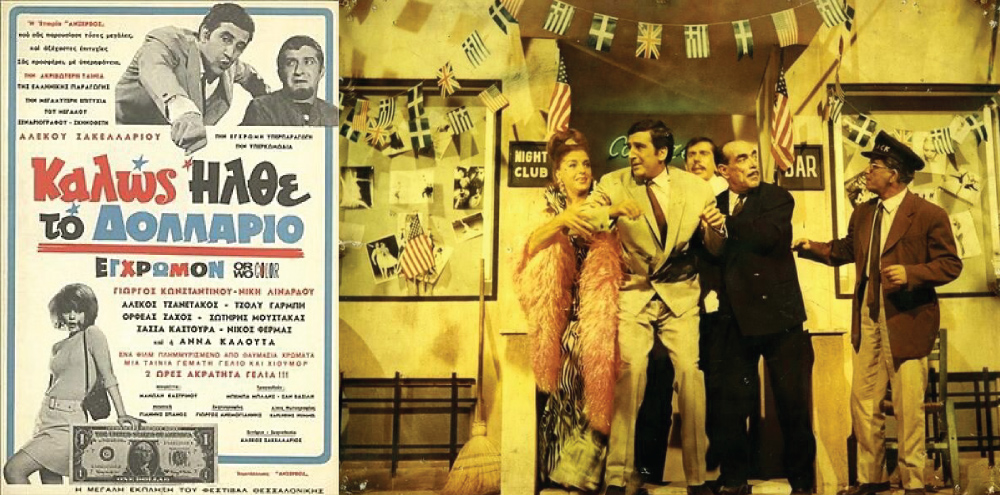
This is reflected in the work of director Alekos Sakellarios, in his film Welcome, dollar (1967), where young women working in a cabaret in Troumpa are depicted attending English lessons focused on the most useful phrases. In the film, the conditions prevailing in Troumpa are presented in an almost comedic manner, leading to a simplification and attenuation of reality. As a result, the harsh nature of sex work is downplayed in the viewer’s perception and transformed into a picturesque and “light” representation. The bodies of these women functioned as conduits through which money circulated into Troumpa. Bodies-as-instruments that kept the port vivid even during the night.
Photos 8 & 9: Poster and still from the film Welcome, dollar, directed by Alekos Sakellarios, 1967.
Two Declines and an end
The first phase of decline of Troumpa occurred in 1956, when, following a proposal by Minister Lina Tsaldari (Karamanlis government, 1956–1958), the definitive abolition of collective brothels was imposed, along with their “transformation” into individually operated establishments. It is even reported that the first such establishment in Troumpa was managed by a priest (Ροδίτη, 2015). During this period, many establishments were closed, resulting in a significant number of women being forced either to relocate to other premises or to seek employment in Athens.
The second phase of decline and the definitive end of Troumpa came in 1967, during the period of the military dictatorship, when Aristidis Skylitsis (Mayor of Piraeus, 1967–1974) imposed the “gentrification” of the area. His primary objective was to eliminate all forms of criminality that had taken root in the district [5]. As a result, hotels and cabarets were closed, while many of the neoclassical buildings that housed them were demolished. Along with them, a part of collective memory was also lost, shaped as it had been by the life of the night, thereby permanently altering the emotional topography and the lived reality of Troumpa.
Traces of a past identity
The present study seeks to outline Filonos Street in the area of Troumpa in its contemporary condition, examining the urban space both vertically—at the level of building units—and horizontally—at the level of the street.
Street level spaces constitute the most dynamic and mutable components of buildings, and can function as indicators of the social and economic condition of an area at any given moment in time. Thus, through historical research, field documentation, mapping, and observation of everyday life in Troumpa—both during daytime and nighttime hours—the study attempts to trace the manifestations of entertainment associated with a past era. At the same time, it highlights their contemporary expressions, as these are inscribed today within the ground floors of buildings. This is, therefore, a study across time, aiming to reveal the living imprint of the past through an extensive effort to document the present.
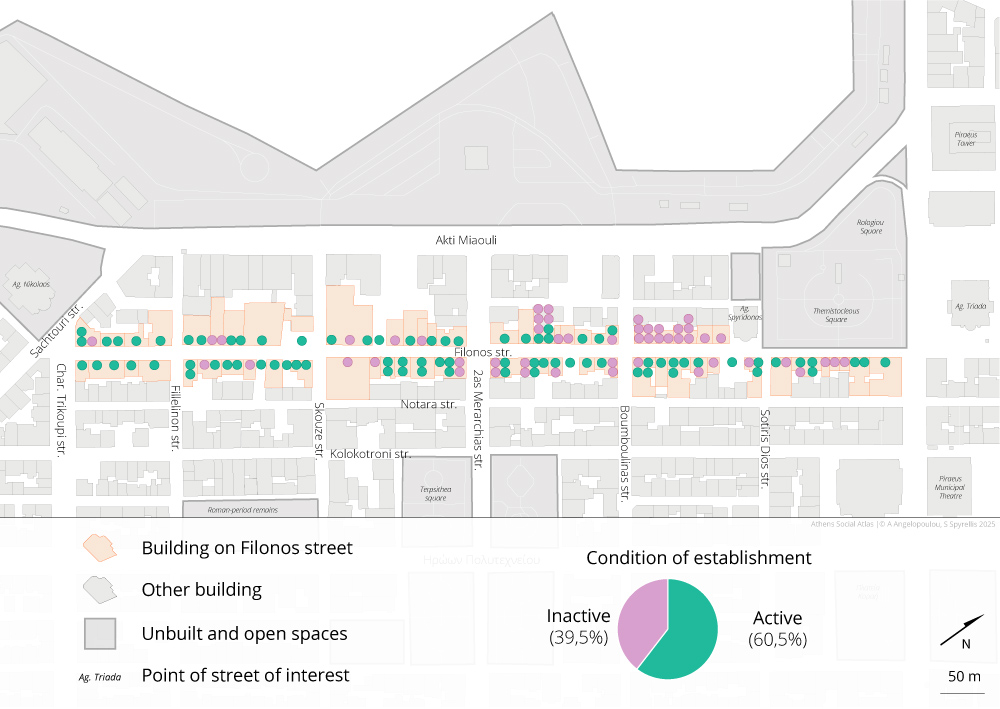
Map 2: Street level establishments on Filonos Street
Map 3: Sketch of the right-hand side of the street, from 2nd Merarchias Street toward the Piraeus Tower
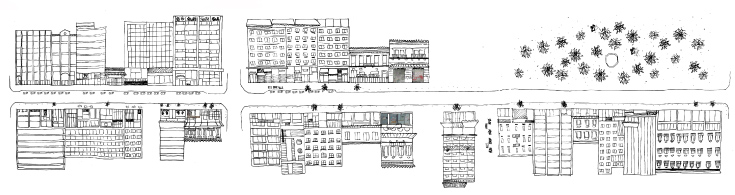 Sketching: Α. Angelopoulou
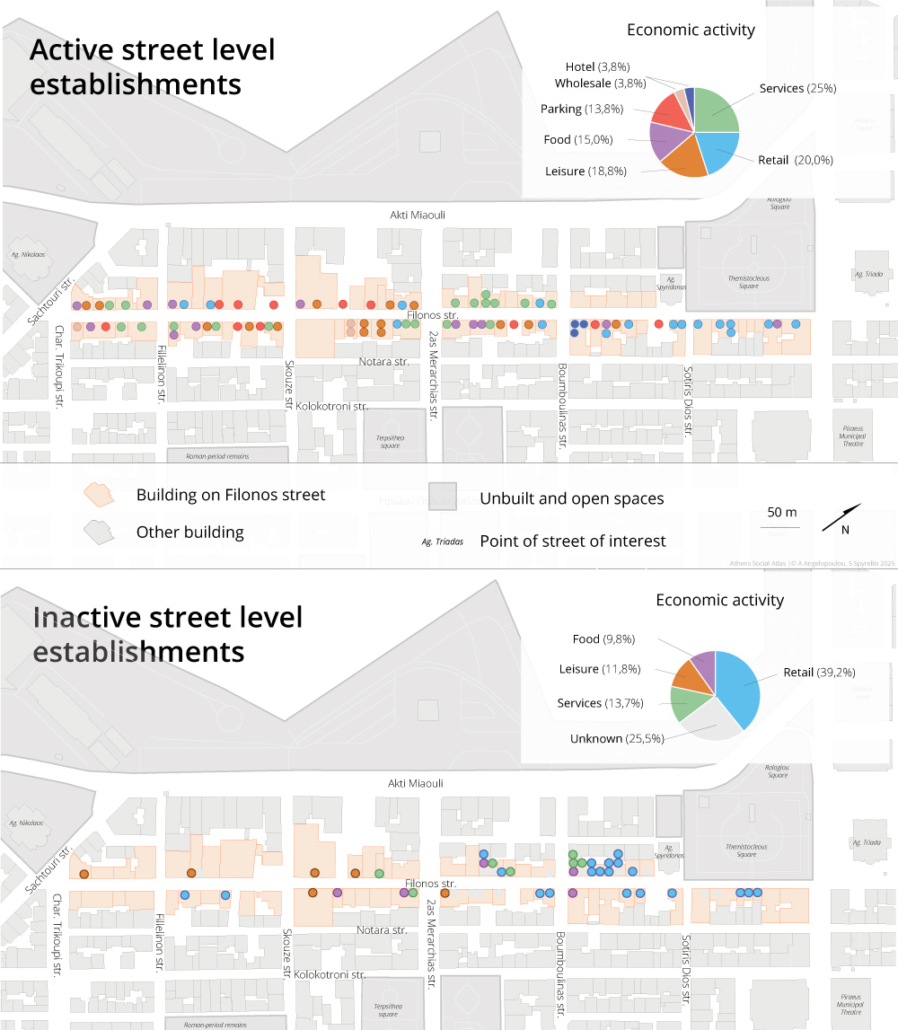
Along Filonos Street, a clear dichotomy in land uses can be observed, with 2nd Merarchias Street functioning as the axis of differentiation (Map 3). On the right-hand side of the street, toward the Piraeus Tower, 58% of the street level units are located. This section was traditionally dominated by retail activities (clothing, footwear, and miscellaneous goods); however, it currently exhibits a marked decline, with 52.7% of street level units remaining vacant. This condition may be attributed, on the one hand, to the presence of a large number of older buildings that fail to meet contemporary requirements and thus constrain development potential, and, on the other hand, to shifts in commercial activity within the area. This is evidenced by the recent redevelopment of the Piraeus Tower and the concentration of commercial functions within it. Under these conditions, large-scale enterprises tend to prevail over smaller ones, leading to the latter’s contraction.
It is important to note the cluster of wholesale trade identified at the intersection of Filonos and Bouboulinas Streets, where three liquor wholesalers are located in succession, serving the needs of the area’s bars.
Table 1: Distribution of street level establishments on the right side of the street according to their activity
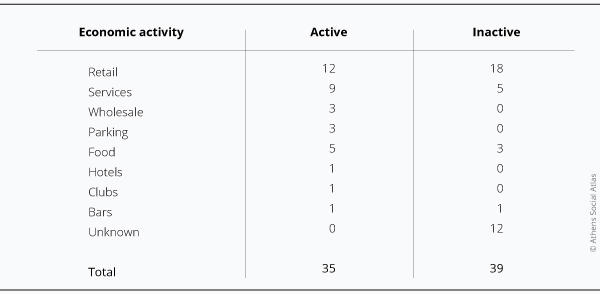
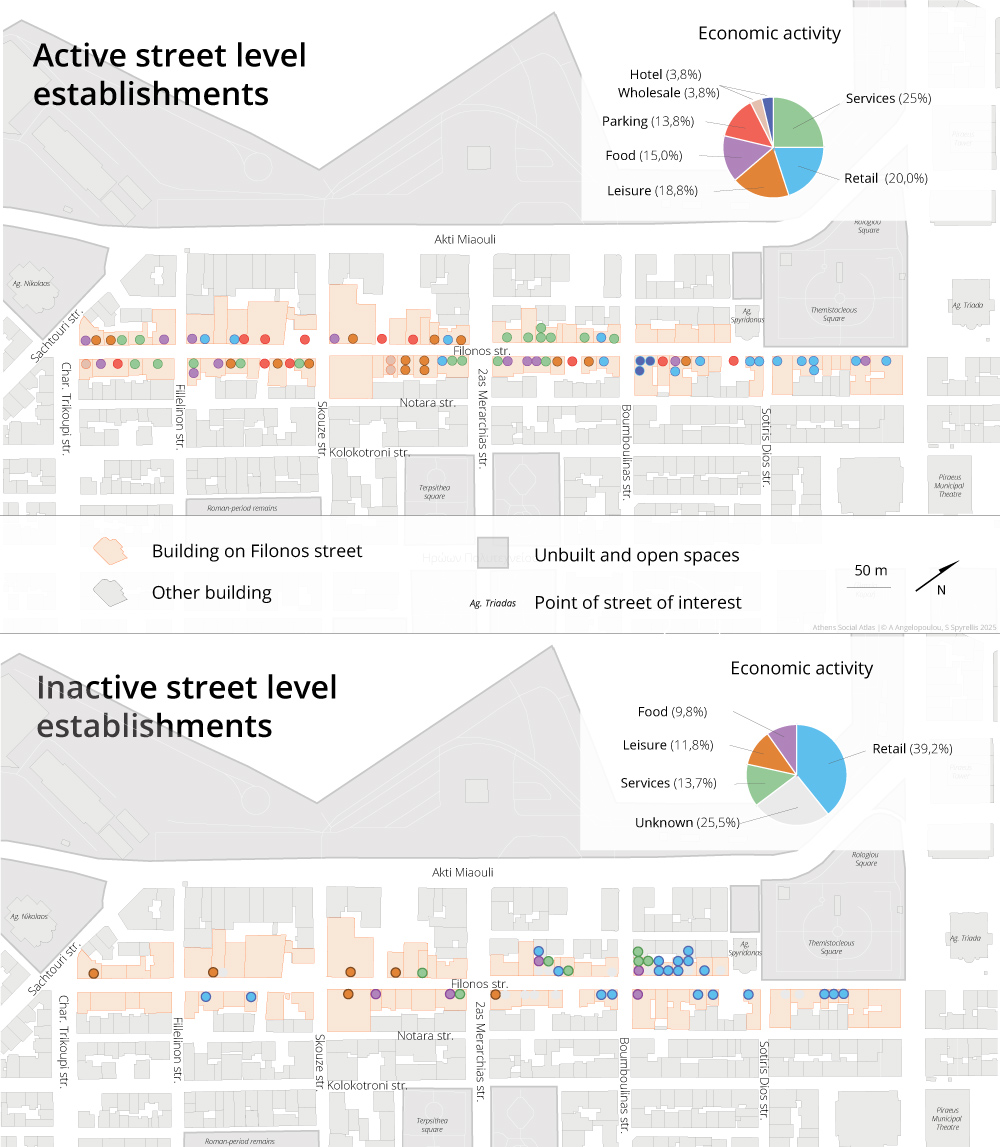
Maps 4 & 5: Distribution of street level establishments by activity on Filonos Street, distinguishing between active and inactive units
The differentiation between the left-hand and right-hand sides of the street is also strongly reflected in the building stock, with the latter concentrating a significant number of older buildings, including several listed structures [6] (Map 6), many of which have been largely abandoned. This abandonment is often attributable to the fact that their restoration and adaptive reuse constitute a particularly costly process, feasible only for owners with substantial financial resources (Kritikos, 2023). In the case of Troumpa, the high cost of maintenance appears to conflict with the social and economic realities of local property owners, effectively rendering ownership a burden.
Map 5: Distribution of buildings by construction period
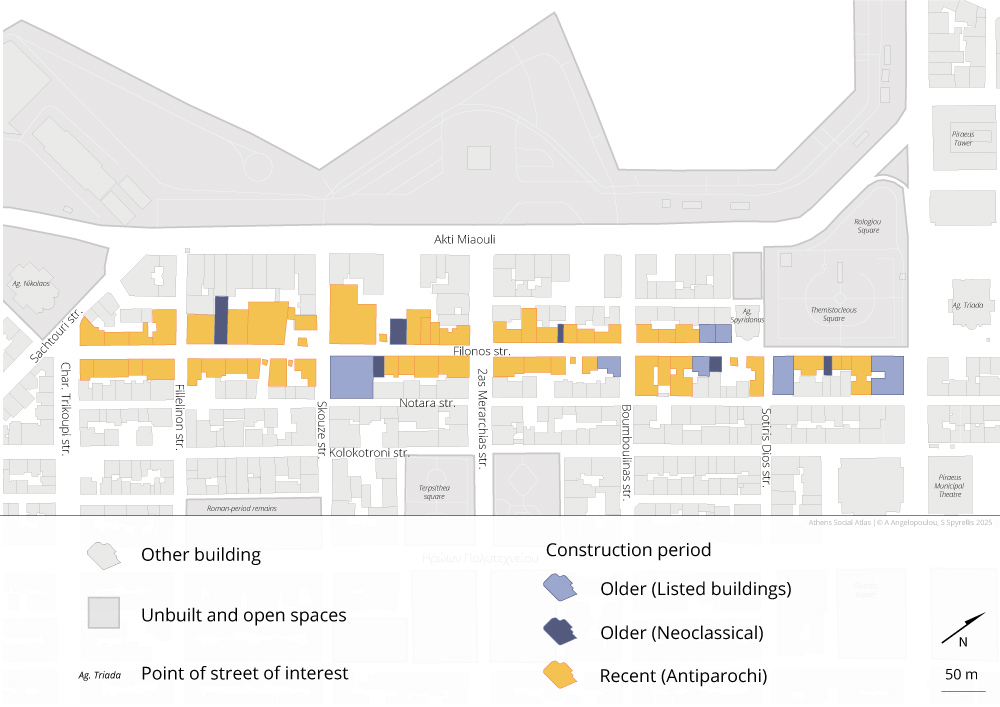
Ultimately, when these properties cease to be suitable for use, they are led to abandonment (Kritikos, 2023). This assumption is, to some extent, confirmed in the case of Filonos Street, as out of 13 such buildings, only two have been renovated to accommodate large retail chains, one of which is, in fact, currently vacant.
Map 6: Renovated building units
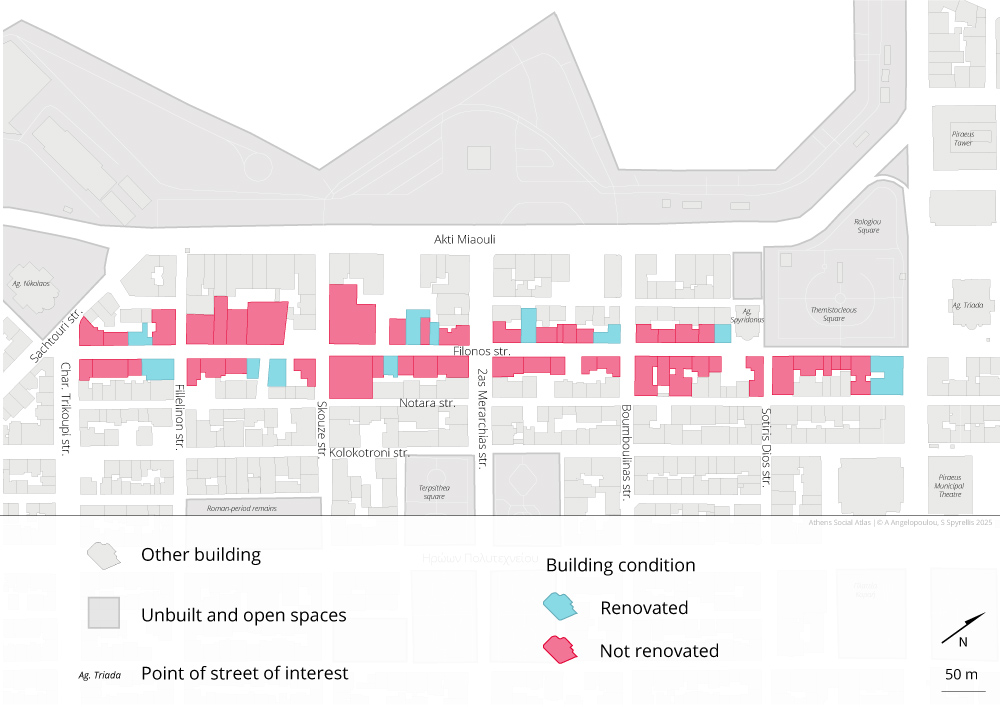
t is important to note that, despite the broader trend of demolition and reconstruction that characterized the antiparochi period, many of the older buildings along Filonos Street have survived—likely due to their historical and architectural value—in contrast to others that were replaced by apartment blocks.
These buildings often appear as though condemned, largely due to the absence of state support, as public authorities are unable to subsidize economically weaker property owners for the restoration of their properties. On Filonos Street, as in other parts of Athens, the ownership of derelict “historic” buildings is gradually being transformed into an exclusive asset in the hands of a few, as only multinational companies appear capable of undertaking such investments.
Despite their abandonment, these buildings remain powerful presences within the urban landscape, generating multiple narrative layers. However, what predominates is a sense of the sublime and a melancholy that stems from their neglect and oblivion (Lyons, 2018). As Walter Benjamin writes (Benjamin, 1998):
“In the ruin, history has physically merged with its surroundings. In this form, history does not assume the shape of an eternal process of life, but rather that of irresistible decay”
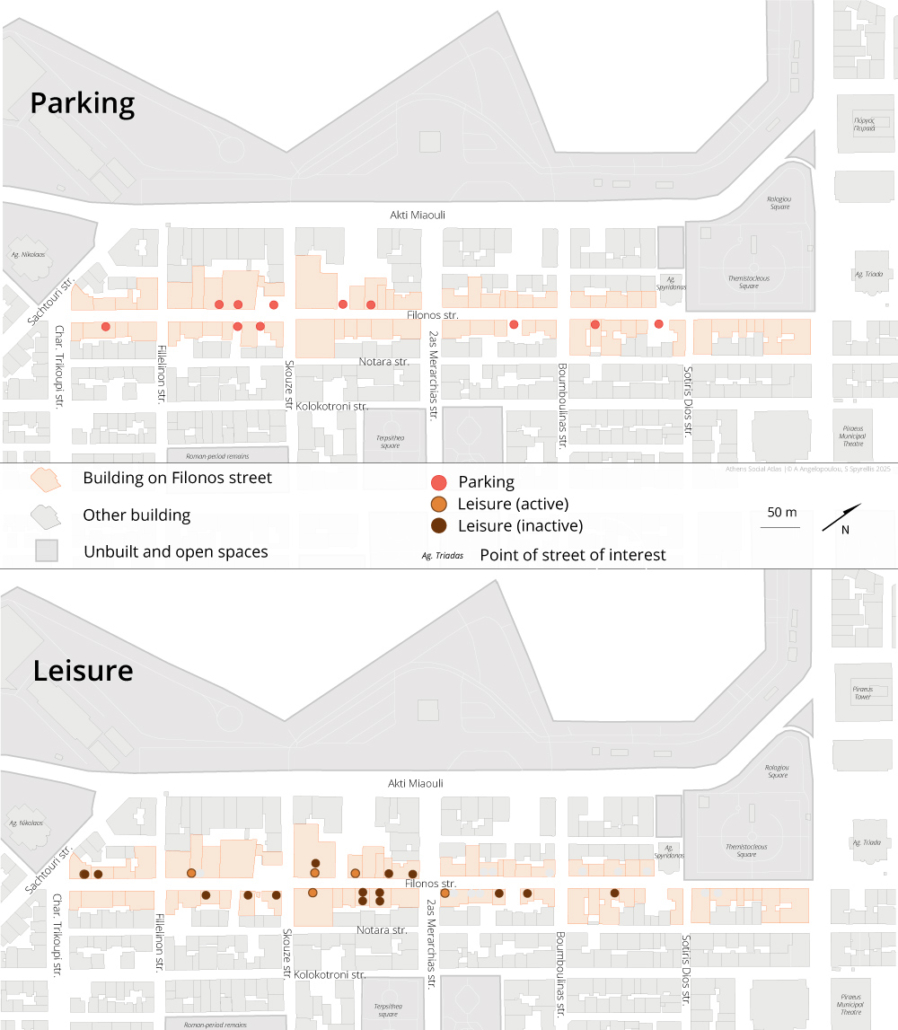
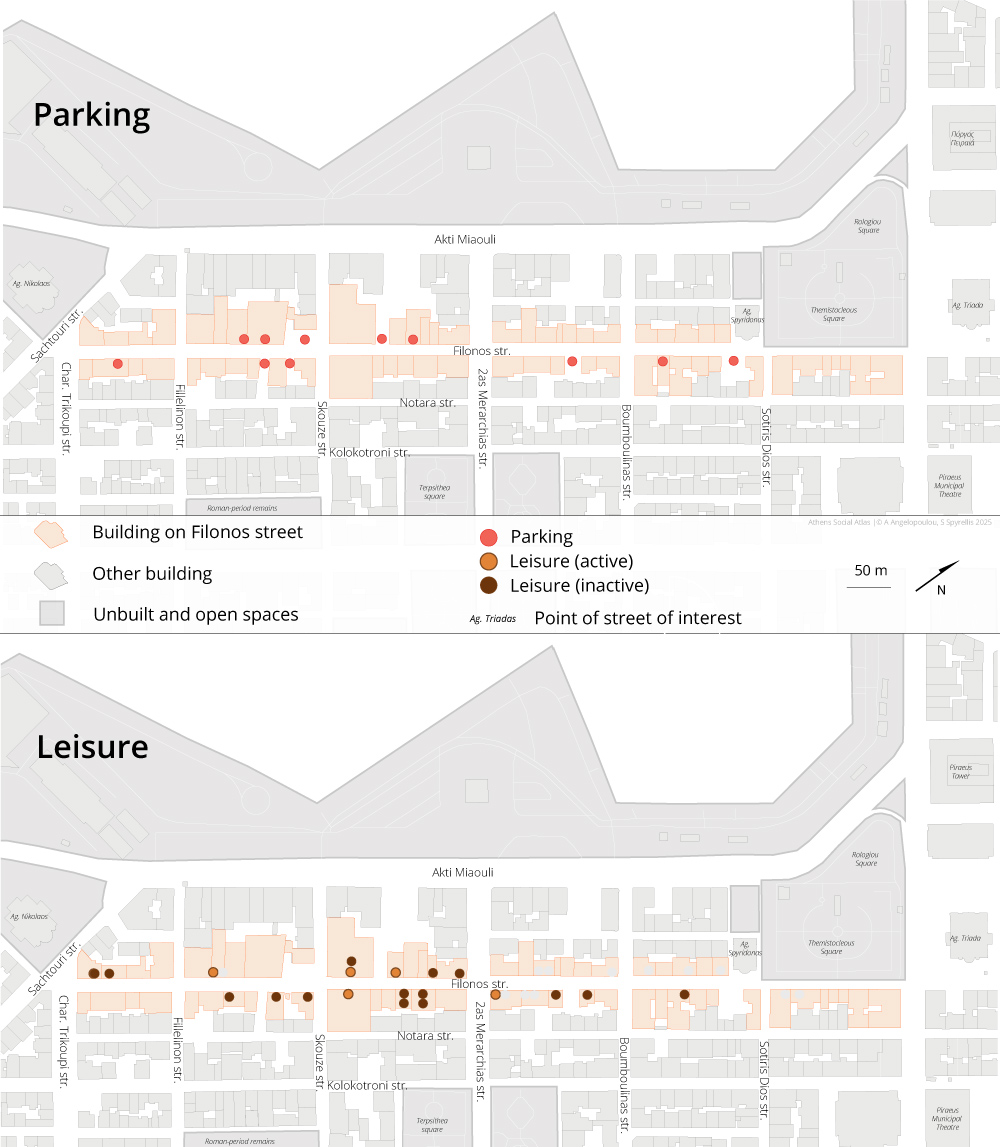
Beyond those buildings that survive in various conditions, others have been demolished, leaving behind vacant plots that have been converted into parking spaces in order to accommodate the increased demands of the numerous offices and functions housed within the street’s building units (Map 7).
These spaces are encountered along the entire length of Filonos Street, highlighting its transient character, as it appears to function primarily as a thoroughfare and a site serving “transitory” users. In this way, a spatial condition is produced in which permanent presence is replaced by temporariness.
Maps 7 & 8: Parking areas and leisure spaces
Map 9: Sketch of the right-hand side of the street
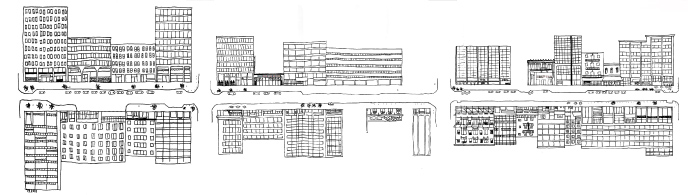
Sketching: by A. Angelopoulou
The intense noise, particularly during the evening hours, renders the transition to the left-hand side perceptible well before the visitor comes into visual contact with the space, as the deafening music from the clubs “welcomes” them several blocks in advance and guides them toward these venues. Here, a distinctly different spatial dynamic is observed. On this vibrant side of the street, closely associated with the reputation of its past, a high concentration of leisure-related functions is identified, with only 21.8% of street level units currently remaining vacant (Maps 2 & 8).
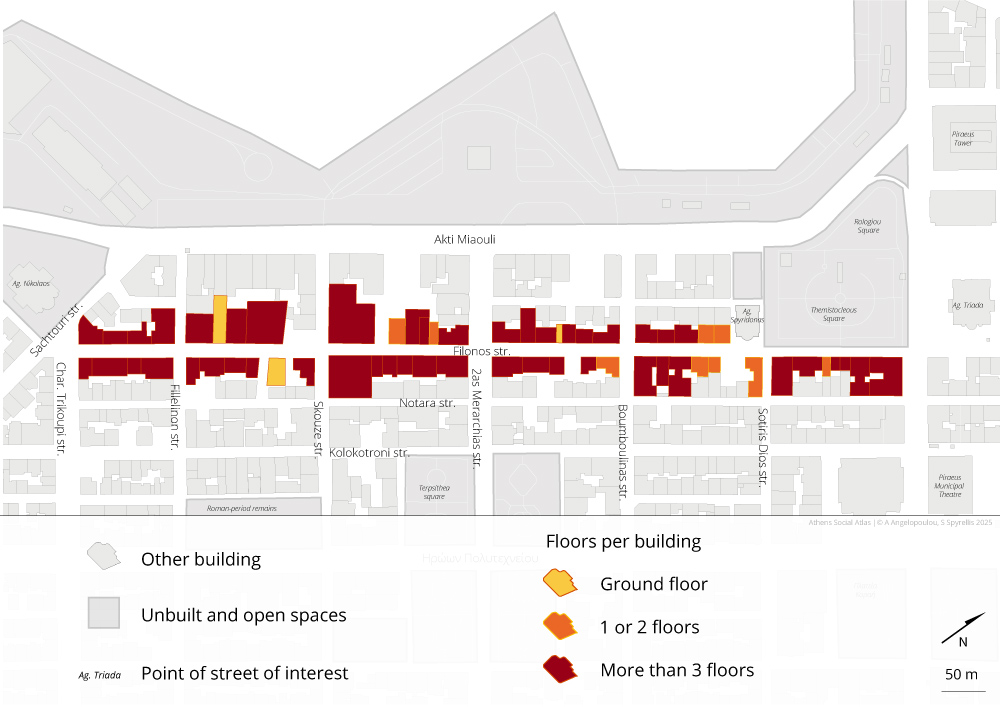
Looking upward, the visitor encounters multi-storey buildings, products of the antiparochi system, exceeding three storeys (Map 10), while the majority of renovated buildings are also located on this side.
Map 10: Vertical distribution of building units by floor count
At street level, one encounters a multitude of nightclubs, characterized by illuminated signs in English and dark façades that obstruct visibility into their interiors, thereby reinforcing the narrative of a “hidden” atmosphere that defines the area. Among them, a multifunctional three-storey venue persists, accommodating an erotic cinema, cabins, dark rooms, and other facilities. Its operation extends from the morning hours until late at night, conveying a sense of continuous accessibility, with a steady flow of activity throughout the day.
Table 2: Distribution of street level establishments on the left side of the street according to their activity
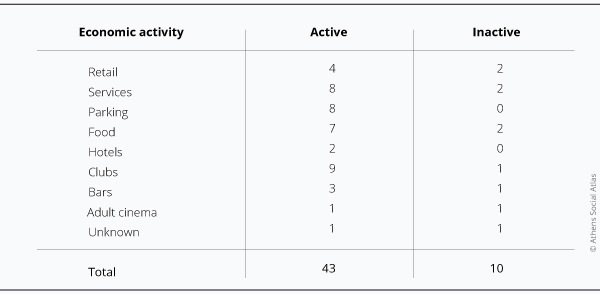
Thus, it can be concluded that the identity of Troumpa remains, to a large extent, closely associated with nightlife, primarily through clubs that adopt practices of questionable aesthetic value and offer inexpensive forms of entertainment.
This observation gains further significance when one considers that the traditional form of sex work has largely declined, as the conventional street-based “scene” is encountered increasingly rarely. This practice has been supplanted by a range of digital applications/ platforms accessible through personal devices, which provide immediate and convenient access from virtually any location at the touch of a button.
The ‘Invisible’ and the Afterword
Despite the transformations that have taken place in the area, Troumpa continues to retain the atmosphere of the “invisible” and the “hidden.” In the past, this dimension was expressed through activities of deviance occurring in brothels, hotels, and cabarets, in line with the analysis of Michel Foucault (Foucault, 2012). It is important to note that in previous decades, various points along Filonos Street functioned as refuges for groups that the city sought to exclude from its official narrative, such as drug users and migrants.
Today, the transience that characterizes visits to the street, once associated with transactional sexuality, is now manifested through parking infrastructures. In this sense, the “invisible” has not disappeared, but has instead been transformed through uses essential to the functioning of the city, such as parking spaces. These spaces are often located in basements or at the street level, in an attempt to avoid projecting their activity into the public realm; however, in the case of Troumpa, they frequently occupy entire buildings or plots.
In this way, Troumpa remains the “invisible” part of Piraeus, albeit no longer in its former form. Today, the area is no longer identified with the provocative or the illicit, but rather with the functional and the transient.
Troumpa continues to constitute a living symbol of the city-port’s history, where past and present are interwoven within the urban landscape. At street level, one can discern the lost night of Filonos and the traces of social memory. At the level of buildings, units operate as carriers of history, where even their abandonment generates narratives. Yet, the traces of the intense nightlife of the past have not vanished; on the contrary, they continue to shape the identity of the area, producing a complex urban reality.
[1] A renowned composer, lyricist, and performer of rebetiko music.
[2] The “Rebetis Bridge” is located opposite the Church of Agios Dionysios; it crosses over the railway lines (Larissis Railway Station, also known as the “Station of Exile”) and leads to the outskirts of the Vourla complex..
[3] Tekedes were hashish dens. They were typically makeshift structures furnished with two to three low seats and often functioned as spaces for the musical performance of rebetiko songs.
[4] Τα στέκια – «Τα Βούρλα» | 31/3/2019 | ΕΡΤ – Hellenic Broadcasting Corporation (Accessed on 31/8/202
[5] Documentary – The History of Legendary Troumpa (istoriatisTroumpas)
[6] Ministry of Environment and Energy (Greece), https://estia.minenv.gr/
Entry citation
Angelopoulou, A. (2025) The Lost Night of Filonos, in Maloutas T., Spyrellis S. (eds) Athens Social Atlas. Digital compendium of texts and visual material. URL: https://www.athenssocialatlas.gr/en/article/the-lost-night-of-filonos/ , DOI: 10.17902/20971.129
Atlas citation
Maloutas T., Spyrellis S. (eds) (2015) Athens Social Atlas. Digital compendium of texts and visual material. URL: https://www.athenssocialatlas.gr/en/ , DOI: 10.17902/20971.9
References
- Πετρόπουλος Η (1980a), Τούρκικος καφές εν Ελλάδι, εκδ. Γράμματα, Αθήνα
- Πετρόπουλος H (1980b), Το μπουρδέλο, εκδ. Γράμματα, Αθήνα
- Πισιμίσης Β, (2021), «Βούρλα Τρούμπα: μια περιήγηση στον χώρο του περιθωρίου και της πορνείας του Πειραιά (1840-1968)», εκδ. Μωβ
- Ροδίτη B (2015), Πειραιάς: από τα Βούρλα στην Τρούμπα. Συνυφάνσεις σεξουαλικότητας και κυριαρχίας στον αστικό χώρο. Μεταπτυχιακή εργασία, Πανεπιστήμιο Θεσσαλίας, ΤΑΜ
- Kritikos C.G (2023) Taking Action. Transforming Athens’ Urban Landscapes, Facing Athens’ urban heritage paradox: an abandoned building stock as common(s)
- Lyons S, (2018), Ruin Porn and the Obsession with Decay, Macquarie University, Sydney, Australia
- Benjamin W, (1998), Τhe origin of the German Tragic Drama, εκδ. VERSO BOOKS
- Foucault M (2012), Ετεροτοπίες και άλλα κείμενα, εκδόσεις Πλέθρον, 2012